




By Oyez Olatunde Rex ( with stories culled from NY Times)
For weeks, which turned into months, hoardes of diplomatic and military pressures, piled on the desk of Benjamin Nethanyahu, Israeli prime Minister, a prime actor in the Middle East Crisis, which daily moves humanity closer to another world war.
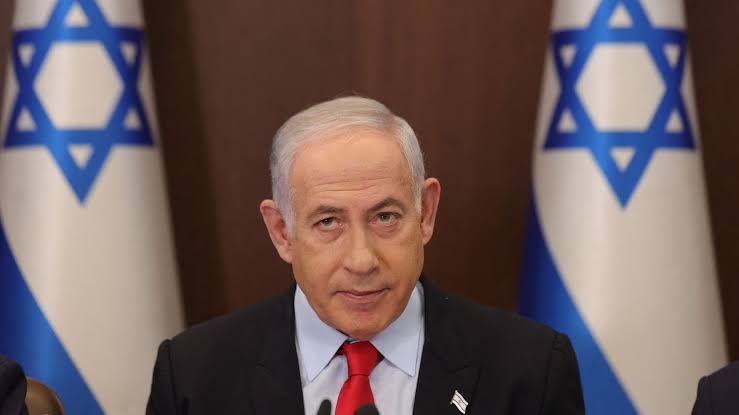
From the meddlesome genocide accusations of Israel by South Africa at the ICJ, to the parallel attacks against Israel, launched by Hezebola in Lebanon; surreptitious attacks on the state of Israel by Iran backed rogue militias; the Houthis protest attacks on cargo ships on the Red Sea and humanity’s collective efforts at the United Nation, the attention was on Isreal’s military adventurism in Gaza.
In all of these, the agent provocateur, Hamas played the victim; reeling out press information on civilian casualties that outraged the rest of humanity.
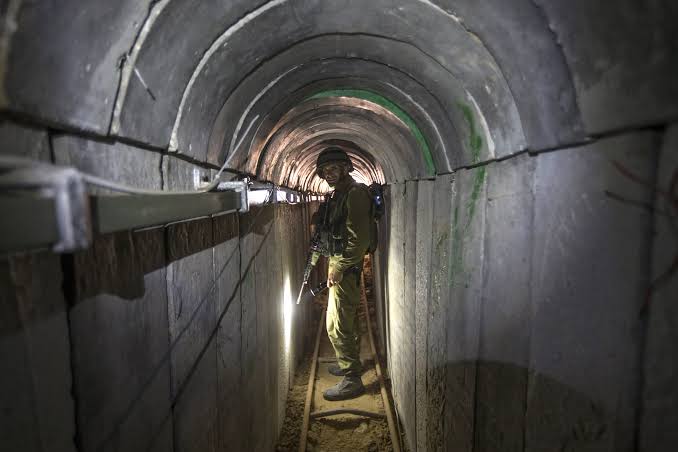
The Hamas leaders who were well esconced in underground tunnels continue to put Gaza civilian populations in the way of harm by siting armouries and military operations in schools and hospitals.
- Nigeria’s First Ebola Patient Identified as Wife of Swiss Diplomat as Authorities Probe Source of Infection
 Nigeria’s latest Ebola case has been traced to a 42-year-old…
- MURIC Seeks Police Probe into Alleged Killing of Man Inside Oyo Mosque
 The Muslim Rights Concern (MURIC) has petitioned the police over…
Read More “MURIC Seeks Police Probe into Alleged Killing of Man Inside Oyo Mosque” »
The civilian populations in Gaza were daily annihilated, being collateral damages of Israeli military incursions. The survivors lived in highly deprived conditions as a humanitarian crisis loomed.
Beneath the destroyed cities of Gaza was the labyrinth of tunnels in which the Hamas lived and launched their military operations. They had food, medications, fuel and other sustenance lacked by the innocent, dying civilians.

In the darkest part of these tunnels were housed hostages used to satiate some of the darkest secret Monstrosities of the Hamas.
Israeli Hostage Says She Was Sexually Assaulted and Tortured in Gaza
“Amit Soussana is the first former hostage to publicly say she was sexually abused in captivity.
A U.N. report has said it found “clear and convincing information” that some hostages suffered “conflict-related sexual violence.”
Patrick Kingsley and Ronen Bergman, both NY Times reporters interviewed Amit Soussana for eight hours and doctors she spoke with immediately after her release. They also reviewed medical records, videos, text messages and photographs.
Amit Soussana, an Israeli lawyer, was abducted from her home on Oct. 7, beaten and dragged into Gaza by at least 10 men, some armed.
” Several days into her captivity, she said, her guard began asking about her sex life.
Ms. Soussana said she was held alone in a child’s bedroom, chained by her left ankle. Sometimes, the guard would enter, sit beside her on the bed, lift her shirt and touch her, she said.
He also repeatedly asked when her period was due. When her period ended, around Oct. 18, she tried to put him off by pretending that she was bleeding for nearly a week, she recalled.”
Around Oct. 24, the guard, who called himself Muhammad, attacked her, she said.
“Early that morning, she said, Muhammad unlocked her chain and left her in the bathroom. After she undressed and began washing herself in the bathtub, Muhammad returned and stood in the doorway, holding a pistol.”
“He came towards me and shoved the gun at my forehead,” After hitting Ms. Soussana and forcing her to remove her towel, Muhammad groped her, sat her on the edge of the bathtub and hit her again”
“He dragged her at gunpoint back to the child’s bedroom, a room covered in images of the cartoon character SpongeBob SquarePants, she recalled.”
“Then he, with the gun pointed at me, forced me to commit a sexual act on him,” Ms. Soussana told the reporters.
Ms. Soussana, 40, is the first Israeli to speak publicly about being sexually assaulted during captivity after the Hamas-led raid on southern Israel. In her interviews with The Times, conducted mostly in English, she provided extensive details of sexual and other violence she suffered during a 55-day ordeal.
“Ms. Soussana’s personal account of her experience in captivity is consistent with what she told two doctors and a social worker less than 24 hours after she was freed on Nov. 30.”
Ms. Soussana described being “detained in roughly half a dozen sites, including private homes of top shots, an office and a subterranean tunnel.”
“Later in her detention, she said, a group of captors suspended her across the gap between two couches and beat her.
“For months, Hamas and its supporters have denied that its members sexually abused people in captivity or during the Oct. 7 terrorist attack in southern Israel.
This month, a United Nations report said that there was “clear and convincing information” that some hostages had suffered sexual violence and there were “reasonable grounds” to believe sexual violence occurred during the raid, while acknowledging the “challenges and limitations” of examining the issue.
“Ms. Soussana said she had decided to speak out now to raise awareness about the plight of the hostages still in Gaza, whose number has been put at more than 100, as negotiations for a cease-fire falter.”
Siegal Sadetzki, a professor at Tel Aviv University medical school who is helping and advising Ms. Soussana’s family as a volunteer, said Ms. Soussana first told her about the sexual assault within days of her release. Professor Sadetzki, a former top Israeli health official, said Ms. Soussana’s accounts have remained consistent.
Ms. Soussana also spoke to the U.N. team that published the report on sexual violence, but The Times was unable to review her testimony.
A spokesman for Hamas, Basem Naim, said in a 1,300-word response to The Times that it was essential for the group to investigate Ms. Soussana’s allegations, but that such an inquiry was impossible in “the current circumstances.”
Mr. Naim cast doubt on Ms. Soussana’s account, questioning why she had not spoken publicly about the extent of her mistreatment. He said the level of detail in her account makes “it difficult to believe the story, unless it was designed by some security officers.”
“For us, the human body, and especially that of the woman, is sacred,” he said, adding that Hamas’s religious beliefs “forbade any mistreatment of any human being, regardless of his sex, religion or ethnicity.”

Mr. Naim criticized The Times for insufficient coverage of Palestinian suffering, including reports of sexual assault by Israeli soldiers on Palestinian women, which have been the subject of investigations by U.N. officials, rights groups and others. He also said “civilian hostages were not the target” of the raid and said “we have from the first moment declared our readiness to release them.”
“A Hamas planning document found in one village shortly after the Oct. 7 raid, which was reviewed by The Times, said: “Take soldiers and civilians as prisoners and hostages to negotiate with.” Video from Oct. 7 shows uniformed Hamas militants abducting civilians.”