




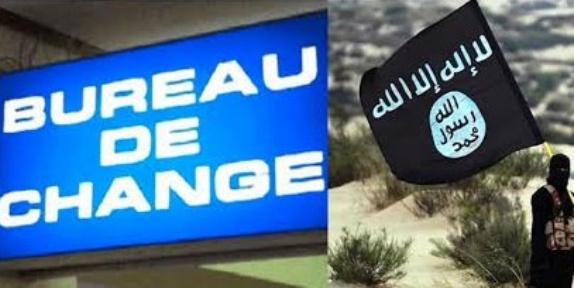
The United States government has imposed sanctions on a Nigeria-based money exchange operator accused of facilitating the movement of funds for the Islamic State of Iraq and Syria (ISIS), as part of a broader crackdown on the terrorist group’s global financial network.
According to U.S. authorities, the sanctions target three individuals and six entities operating across Europe, the Middle East and West Africa who allegedly helped ISIS transfer and conceal funds used to support terrorist activities. The measures were announced by the U.S. Department of the Treasury in coordination with the State Department.
Among those sanctioned is Mukhtar Muhammad, a Nigeria-based operator linked to bureaux de change businesses that U.S. officials claim were used to move money on behalf of ISIS affiliates. The Treasury Department said the network enabled the terrorist organisation to access and transfer funds across international borders, helping sustain its operations despite global efforts to disrupt its financing channels.
Tommy Pigott, spokesperson for the U.S. State Department, said the sanctions form part of Washington’s continuing efforts to weaken ISIS by targeting the financial structures that support the group’s activities. He noted that disrupting funding networks remains a critical element of counterterrorism operations.
Under the sanctions, any assets or property interests belonging to the designated individuals and entities that fall under U.S. jurisdiction will be frozen. American citizens and businesses are also prohibited from conducting transactions with those listed. Additionally, entities owned 50 per cent or more by sanctioned persons may also be subject to restrictions.
U.S. officials said the action underscores the importance of international cooperation in identifying and dismantling financial networks that enable terrorist organisations to raise, store and move funds across multiple regions.
The latest sanctions come as governments worldwide intensify efforts to combat terrorist financing and prevent extremist groups from exploiting informal financial systems and cross-border money transfer channels.
- EFCC Raids Four Illegal Lithium Plants in Ogun, Arrests 14 Chinese Nationals and Nigerian
 The Economic and Financial Crimes Commission (EFCC) has arrested 15…
- 2027 Elections: OK Movement Faults NDC’s Late Campaign Preparations, Questions Grassroots Strength
 The Obi-Kwankwaso (OK) Movement has criticised the Nigeria Democratic Congress…