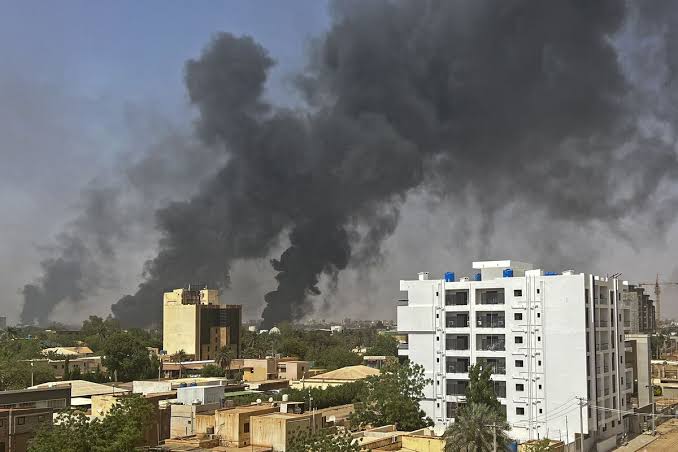
Following the persistent rejection of ceasefire entreaties, the first day of Eid in Sudan on Friday was marked by heavy fighting, gunfire and the sound of explosions across Khartoum.
Paramilitaries and the army fought for a sixth day despite calls for a truce over the holiday to mark the end of Ramadan.
Where the situation was calmer, hundreds gathered for early prayers even though the crackle of gunfire echoed through the city.
Since fighting began on Saturday between the Rapid Support Forces led by Gen Mohamed Dagalo, known as Hemedti, and his former boss, Sudanese army chief Gen Abdel Fattah Al Burhan, more than 300 have been killed and thousands wounded.
The Central Committee of Sudan Doctors said that overnight, as Eid Al Fitr celebrations marking the end of Ramadan began, “several areas of Khartoum were bombed”. It reported “shelling and clashes” for the sixth night in a row.
Khartoum has seen some of the fiercest fighting, with air strikes and tanks firing in densely packed districts. Most of its five million people have been sheltering at home in baking heat without electricity, food or water. Communications are heavily disrupted.
Both UN Secretary General Antonio Guterres and US Secretary of State Antony Blinken called separately for a ceasefire of “at least” three days to mark Eid. An emergency meeting of representatives from the African Union, Arab League, UN Security Council and other regional bodies called for the same thing.
However, only the RSF, a powerful force formed from members of the Janjaweed militia that led years of extreme violence in the western Darfur region, said it would commit to a 72-hour ceasefire starting at dawn.
The failure to halt the fighting on Friday follows two previously agreed and ignored ceasefires earlier in the week as the conflict has raged unabated.
The International Crisis Group said urgent steps were needed to stop a descent into “full-blown civil war”, warning “the nightmare scenario that many feared in Sudan is unfolding”.
[Guardian]