





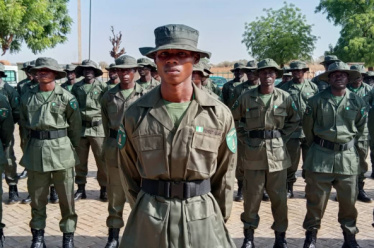
In a major boost to Nigeria’s internal security efforts, the Federal Government has graduated more than 7,000 newly recruited Forest Guards, with immediate deployment slated across seven frontline states to help reclaim forested areas from criminal exploitation and strengthen national security.
Intensive Training Completed Under Presidential Initiative
The graduates successfully completed a three-month intensive training program under the Presidential Forest Guards Initiative, launched by President Bola Ahmed Tinubu in May 2025 as part of a broader strategy to tackle insecurity stemming from terrorists, bandits, kidnappers, and other criminal networks using Nigeria’s forests as operational hideouts.
The training curriculum combined rigorous physical conditioning, tactical fieldcraft, long-range patrol simulations, and environmental conservation principles to ensure that recruits are equipped to operate effectively in challenging terrains. Recruits also received instruction on ethics, human rights, gender rights, and civilian protection, in line with professional standards.
According to official statistics, the program achieved a 98.2% completion rate, with a small number of trainees disqualified for disciplinary reasons and two deaths attributed to pre-existing medical conditions.
Graduations and Deployment Across Key States
Graduation ceremonies took place on December 27, 2025, across seven states selected for the pilot phase: Borno, Sokoto, Yobe, Adamawa, Niger, Kwara, and Kebbi. Governors and deputy governors from these states attended the ceremonies, signaling strong federal-state collaboration.
- Tragedy in Kogi: Police Corporal Allegedly Kills Female Colleague, Takes Own Life After Reported Relationship Crisis
 A tragic shooting incident involving two serving police officers has…
- Tottenham Stun Chelsea at Stamford Bridge as Palmer Sees Red and Maddison Suffers Fresh Injury Blow
 Tottenham Hotspur delivered a statement victory over London rivals Chelsea…
The Office of the National Security Adviser (ONSA), which coordinated the initiative with the Federal Ministry of Environment, has confirmed that the recruits will proceed directly to their duty posts without any delay, with salaries and allowances commencing immediately upon deployment.
Role and Mandate of the Forest Guards
National Security Adviser Mallam Nuhu Ribadu described the newly graduated guards as “first responders, community protectors and a critical layer of Nigeria’s security architecture.” He emphasized that their deployment will help deny criminals sanctuary in forested and hard-to-reach areas, support conventional security agencies, and gather actionable intelligence at the grassroots level.
The initiative is operationally supported by various arms of Nigeria’s security establishment, including the Department of State Services (DSS), Nigerian Army, Navy, Police Force, National Park Service, and the Nigeria Security and Civil Defence Corps (NSCDC), ensuring integrated engagement across multiple fronts.
Indigenous Recruitment Strategy
A notable feature of the program is that recruits were drawn largely from their local government areas, a strategy officials say will help leverage indigenous knowledge of local terrain and build trust within communities affected by insecurity.
Looking Ahead
The Federal Government has indicated that this deployment marks the initial phase of a larger nationwide rollout, with plans to train additional guards for broader coverage across Nigeria’s forest reserves in subsequent cohorts.
Key Objectives of the Forest Guards
Reclaim forested territories used by criminal elements
Support intelligence gathering and joint operations
Strengthen internal security architecture
Protect communities and critical natural resources