




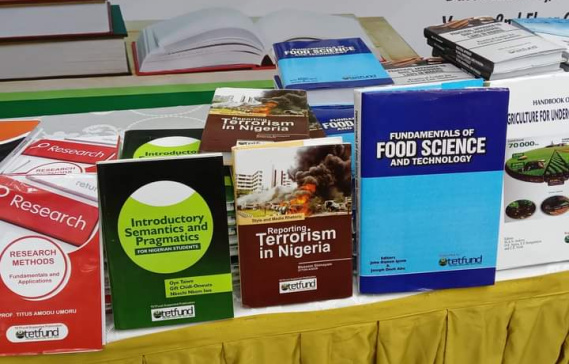
In a major education sector reform aimed at improving quality assurance and restoring order in Nigeria’s schools, the Federal Government has introduced a National Textbook Ranking System for primary, junior secondary, and senior secondary schools across the country.
The initiative is designed to regulate the selection of textbooks used in classrooms and ensure that only high-quality, curriculum-aligned materials are adopted for teaching and learning in Nigerian schools.
According to official details, the system will be implemented through the Nigerian Educational Research and Development Council (NERDC), which already oversees textbook approval. However, under the new framework, NERDC will go beyond approval to evaluate and rank textbooks based on academic quality, clarity, and alignment with national curriculum standards.
To carry out this process effectively, the government will establish standing subject committees made up of education experts. These committees will review submitted textbooks across various subjects and education levels, assessing their pedagogical value before assigning rankings.
A key feature of the reform is that only a limited number of top-ranked textbooks will be approved for use in schools for each subject. This marks a shift from the current system, where schools often have access to multiple competing textbooks with varying levels of quality and consistency.
Government officials say the move is intended to eliminate confusion in classrooms, improve learning outcomes, and address long-standing concerns about the proliferation of substandard textbooks in the education system.
The Federal Ministry of Education also stated that any textbook not ranked under the new system will no longer be permitted for classroom use, even if it was previously approved. This signals a stricter enforcement regime aimed at ensuring compliance and raising educational standards nationwide.
- Nigeria Evacuates First Ebola Patient to Switzerland as Health Minister Confirms Medical Flight
 ABUJA, Nigeria — Nigeria’s first confirmed Ebola patient in more…
- EFCC Raids Four Illegal Lithium Plants in Ogun, Arrests 14 Chinese Nationals and Nigerian
 The Economic and Financial Crimes Commission (EFCC) has arrested 15…
The policy is expected to take effect from the September 2026 academic session, following stakeholder consultations and nationwide sensitisation of educators, publishers, and school administrators.
Education authorities further explained that the reform aligns with global best practices in instructional material standardisation and forms part of broader efforts to strengthen Nigeria’s education system, improve consistency in teaching materials, and enhance student learning outcomes across all levels of basic and secondary education.