





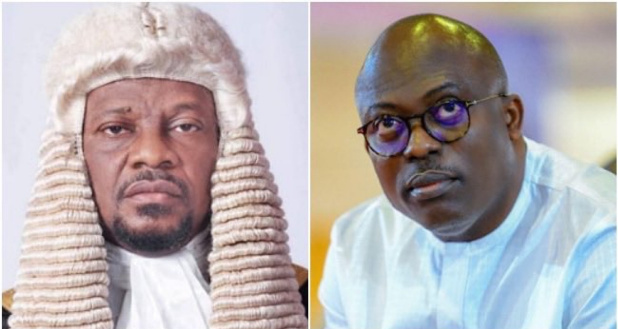
The political tension in Rivers State took a dramatic turn on Thursday after the State House of Assembly served Governor Siminalayi Fubara with an impeachment notice that controversially addressed him as “madam,” igniting fresh debate over the already volatile process.
The development came as lawmakers formally kicked off impeachment proceedings against the governor, accusing him of gross misconduct. The move followed the reading of the allegations on the floor of the House by Major Jack, leader of the Assembly, after which 26 legislators endorsed the notice.
Speaker of the House, Martin Amaewhule, announced that the notice of allegations would be served on Governor Fubara within the constitutionally stipulated timeframe. Later the same day, the Assembly delivered the document, dated January 8, 2026, but with an unusual salutation that referred to the governor as “madam.”
The letter, signed by Amaewhule, stated that the impeachment process was initiated in line with Section 188 of the 1999 Constitution (as amended), which outlines the legal framework for the removal of a sitting governor. It confirmed that the Speaker had received the allegations earlier and was formally transmitting them to the governor.
According to the letter, “I received a copy of the Notice of Allegations of Gross Misconduct dated 5th January 2026 and brought against you by twenty-six (26) members of the Rivers State House of Assembly.” It further noted that the notice was being forwarded in compliance with constitutional provisions.
- Nigeria’s First Ebola Patient Identified as Wife of Swiss Diplomat as Authorities Probe Source of Infection
 Nigeria’s latest Ebola case has been traced to a 42-year-old…
- MURIC Seeks Police Probe into Alleged Killing of Man Inside Oyo Mosque
 The Muslim Rights Concern (MURIC) has petitioned the police over…
Read More “MURIC Seeks Police Probe into Alleged Killing of Man Inside Oyo Mosque” »
Governor Fubara was requested to respond to the allegations within the period allowed by law, as the impeachment process moves to the next procedural stage. No official explanation was offered by the Assembly regarding the gender reference error in the letter.
Interestingly, a separate copy of the same notice was also sent to the Deputy Governor, Ngozi Odu, who was correctly addressed as “madam,” further drawing attention to the discrepancy in the governor’s letter.
The impeachment move is the latest flashpoint in the prolonged political crisis rocking Rivers State. Tensions escalated late last year when the Assembly accused Governor Fubara of authorising expenditures without legislative approval.
A majority of the lawmakers involved are widely seen as loyal to the Minister of the Federal Capital Territory, Nyesom Wike, who has been openly opposed to Fubara’s political ambitions and re-election bid.
Wike has previously accused the governor of violating the terms of a peace agreement brokered before President Bola Tinubu lifted the emergency measures imposed on Rivers State, a decision that allowed Fubara to fully resume office.
As the impeachment process unfolds, the controversial wording of the notice has added another layer of intrigue to an already charged political showdown, with observers closely watching how the crisis will reshape Rivers State’s political landscape.