

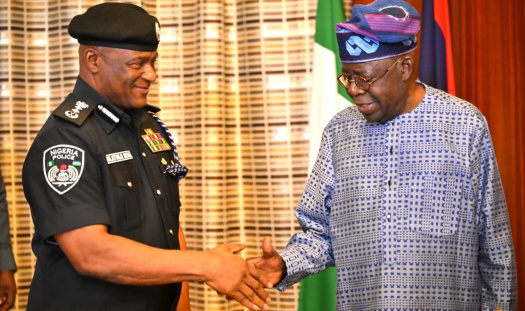
In a surprising turn of events within the leadership of the Nigeria Police Force, President Bola Ahmed Tinubu has reportedly stepped in to halt what would have been the compulsory retirement of around 30 senior police officers following the appointment of Tunji Disu as Acting Inspector-General of Police.
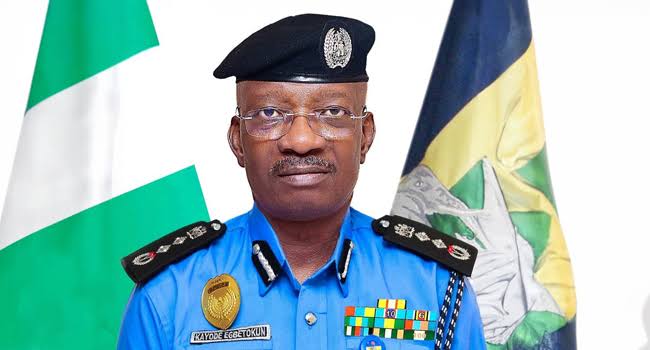
The intervention comes days after former police boss Kayode Egbetokun resigned from his position as Inspector-General, ending a tenure that had been marked by debate over the legality of extensions beyond the statutory retirement age.
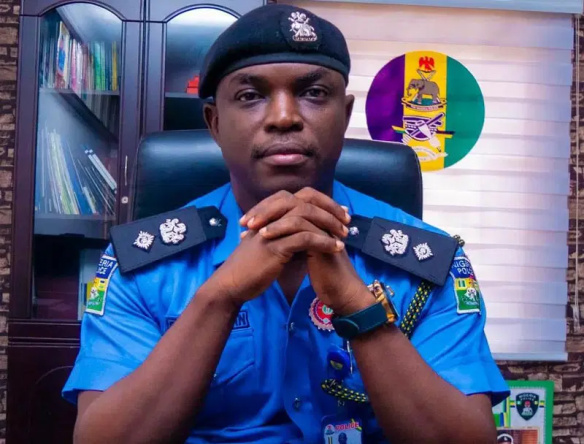
Egbetokun’s exit paved the way for Disu, formerly an Assistant Inspector-General of Police to be decorated into his new role by President Tinubu at the State House in Abuja. The ceremony was attended by top government officials, including the National Security Adviser and the Secretary to the Government of the Federation.
Traditionally, transitions at the top level of the police hierarchy trigger a compulsory retirement of officers senior to the incoming leader to preserve command structure and hierarchy. That practice would have seen several Deputy Inspectors-General (DIGs) and Assistant Inspectors-General (AIGs) retire once Disu assumed leadership.
Internal lists circulating within the force, reported by multiple sources indicated that at least eight DIGs, including officers heading Finance, Logistics, Training and ICT departments, were expected to exit the service under the traditional process.
However, sources close to the Presidency said the planned compulsory retirements have been suspended. A Presidency source quoted in reports said the move was meant to allow Disu the support and experience of senior leadership as he takes the helm of the police force amid ongoing national security challenges.
- Nigeria’s First Ebola Patient Identified as Wife of Swiss Diplomat as Authorities Probe Source of Infection
 Nigeria’s latest Ebola case has been traced to a 42-year-old…
- MURIC Seeks Police Probe into Alleged Killing of Man Inside Oyo Mosque
 The Muslim Rights Concern (MURIC) has petitioned the police over…
Read More “MURIC Seeks Police Probe into Alleged Killing of Man Inside Oyo Mosque” »
Disu’s own appointment has drawn attention because it came just weeks before he was due to reach the mandatory retirement age of 60. Born on April 13, 1966, he was slated to retire on April 13, 2026, but under the Police Act there is provision for a fixed four-year tenure regardless of age, meaning he could serve until 2030 if confirmed.
Despite that legal framework, reports suggest that plans for Disu’s possible tenure beyond April have become uncertain, particularly in light of internal debates over leadership succession norms and the pushback against sweeping retirements.
Civil society voices had criticised a full mass retirement, arguing that losing so many senior officers at once could undermine institutional stability and operational continuity at a time when security demands are high across the country.
With the retirement process now paused, senior officers previously earmarked for exit are reportedly reassessing their positions, and the development has reignited national debate over how police leadership transitions should be handled without disrupting the force’s structure.
President Tinubu’s action reflects growing sensitivity around managing security institutions as the country prepares for the 2027 general elections, a period when policing leadership and effectiveness will be critical.
As the situation evolves, Disu’s confirmation by the Nigeria Police Council and eventual approval by the Senate will be key milestones to watch in determining whether the paused retirements will stand or be revisited under his leadership.