


By Oyez Olatunde Rex
… As appointments, political realignments and the G-15 crisis reshape the state’s political landscape, the signs from Abuja raise fresh questions about who holds the President’s confidence, and what it could mean for Kwara in 2027.
Kwara politics is entering an interesting phase. As the 2027 elections draw closer, political appointments, public statements and shifting alliances are beginning to tell a story of their own.
Governor AbdulRahman AbdulRazaq appears to be enjoying a strong position within the national APC leadership, while some of his political opponents are struggling to keep their ranks together.
Former Senate President Bukola Saraki and the emerging Rainbow Coalition also face the challenge of turning political experience and public declarations into a force that can compete at the polls.
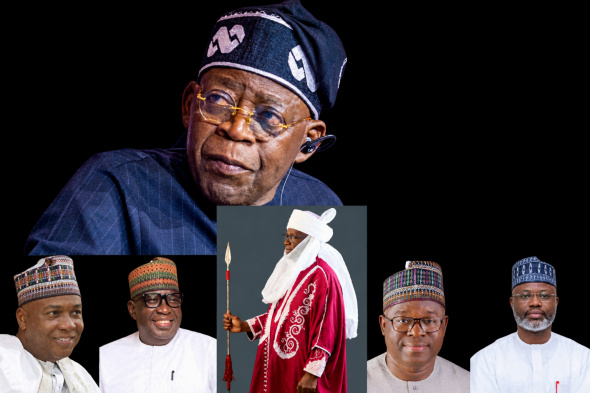
Put these developments together and one question naturally comes up: is President Bola Ahmed Tinubu sending Kwara a message about who he trusts to lead the political charge in the state?
Nobody has produced a public statement in which Tinubu tells Kwara politicians to obey AbdulRazaq. But politics does not always work through direct instructions. Sometimes, the message comes through appointments, public praise, access to the centre of power and the people who are brought into the room when important decisions are made.
That is why the recent developments deserve attention. They may not tell the whole story, but they offer clues about the direction of the political wind. The task is to read those clues carefully without turning assumptions into facts or mistaking political advantage for guaranteed victory.
This analysis is not a campaign for AbdulRazaq, Saraki, the G-15 or any other political camp. It is an examination of the trends unfolding in Kwara and what they could mean for the state’s politics ahead of 2027.
Shettima’s visit: A public honour with a political message
The visit of Vice President Kashim Shettima to Ilorin on September 16, 2026, provided one of the clearest talking points in Kwara politics.
Shettima came for the turbaning of AbdulRazaq as the Sardauna of the Ilorin Emirate by the Emir of Ilorin, Ibrahim Sulu-Gambari. The visit also featured the commissioning of the Kwara State Revenue House and a garment factory.
Beyond the ceremonies, however, Shettima made remarks that brought the governor’s political relationship with Tinubu into focus. He recalled how AbdulRazaq was among the six northern governors who supported Tinubu during the political consultations leading to the APC presidential primary in 2022.
That was not a small reminder and the political significance of the Ilorin visit cannot be ignored.
An earlier analysis published by Rextun City Updates on the visit and Shettima’s account of the six northern governors raised this same question: how much does a governor’s history with the President matter when the next political battle approaches?
The answer may not be found in the ceremony alone. It becomes clearer when the visit is considered alongside the governor’s subsequent position in the presidential campaign structure.
The campaign council: AbdulRazaq gets a seat close to the centre
The appointment of AbdulRazaq as Deputy Vice Chairman III of the APC Presidential Campaign Council for the 2027 election adds another important piece to the picture.
This is more than an ordinary party title. The presidential campaign council is part of the machinery expected to coordinate the President’s re-election campaign, mobilise political support and bring different interests together.
AbdulRazaq’s position gives him a place in that national structure. His role as the President’s state coordinator in Kwara further strengthens his visibility in the campaign.
For local politicians, the message is worth considering. The governor is not only the man occupying Government House in Ilorin; he is also a senior figure in the organisation preparing to return Tinubu to office.
That gives him access, visibility and an advantage in political conversations that other contenders may struggle to match.
It does not mean that every APC member must agree with him. Neither does it mean that Tinubu has handed him unlimited power to determine who wins every political contest in Kwara.
But the appointment establishes a fact that cannot easily be dismissed: AbdulRazaq has been entrusted with an important responsibility in the President’s campaign organisation.
For politicians trying to secure the Presidency’s intervention in Kwara affairs, that is a development they must take seriously.
Yahaya Seriki and the politics of appointments
The story surrounding Ambassador Yahaya Seriki also shows how sensitive political appointments have become.
Seriki’s name was absent from an earlier version of the campaign council list, prompting speculation about his political standing and relationship with the ruling establishment. Some observers linked the omission to the shifting alignments involving Saraki, the Rainbow Coalition and other political interests.
However, Seriki subsequently appeared in the comprehensive list as North-Central Zonal Director of Youth Mobilisation.
That correction matters. The episode tells us something about the atmosphere in Kwara politics. In a period of intense competition, even a name missing from a preliminary list can trigger questions about loyalty, access and political relevance. Same way the new appointment is of enormous factorial in Gov. AbdulRazaq’s soaring profile.
In politics, an appointment matters, but so does the work and influence behind it.
Saraki and the Rainbow Coalition: Big names are not enough
Former Senate President Bukola Saraki remains one of the most experienced political figures associated with Kwara.
He governed the state, served in the Senate and became Senate President. For years, his political structure was a major force in Kwara, until the O To Ge movement swept the established order from power in 2019.
His political experience and network remain relevant. That is why the emergence of the Rainbow Coalition has attracted attention among those watching the state’s next political contest.
The coalition presents an opportunity for politicians who want to challenge AbdulRazaq’s influence to come together. But bringing different interests under one umbrella is easier said than done.
There is also an interesting national dimension. Senator Saliu Mustapha has publicly claimed that Saraki supported the Rainbow Coalition’s effort to secure Tinubu’s re-election, despite the former Senate President’s position within the PDP in Kwara.
If that arrangement holds, it would reflect a familiar feature of Nigerian politics: politicians can oppose one another at the state level while supporting the same presidential candidate.
But the presidential campaign council presents a different picture. AbdulRazaq has a clearly identified senior role in the structure, while Saraki has not been named among the prominent campaign council officials reported in the list reviewed for this analysis.
That difference is politically significant, but it must not be exaggerated. Saraki’s absence from the list does not prove that Tinubu has rejected him, nor does it mean that his political network has become irrelevant.
What it does show is that the two men currently occupy different positions in the publicly visible presidential campaign structure.
Saraki’s challenge is to demonstrate that his political experience can still translate into broad electoral support. The Rainbow Coalition must show that it can unite its members, settle disagreements over leadership and candidates, organise at the grassroots and convince voters that it offers something beyond opposition to AbdulRazaq.
A coalition can attract attention because of the people behind it. It survives, however, through organisation, trust and the ability to deliver votes.
The G-15 crisis: Can the group hold itself together?
The G-15 began as a group of APC politicians dissatisfied with the outcome of the party’s 2026 primaries. Its members included prominent aspirants, political leaders and other stakeholders who felt that the process had failed to meet their expectations.
Their grievances centred on consultation, internal democracy and the emergence of Speaker Salihu Yakubu Danladi as the APC’s governorship candidate.
The group projected itself as a force capable of challenging the outcome and pushing the party leadership to reconsider its position.
But political movements face a difficult test when their members begin to calculate their individual futures.
On October 1, former G-15 supporters and grassroots mobilisers across the four local government areas of Kwara Central announced their return to the APC, pledging support for AbdulRazaq, Danladi and other party candidates.
That development raises a serious question about the group’s ability to maintain its original strength.
A political alliance is not built on prominent names alone. It needs people who can organise meetings, reach voters in the wards, mobilise supporters and maintain relationships with community leaders.
When grassroots supporters begin to leave, the group may retain its public voice but lose some of the practical strength needed for an election.
This does not mean that the G-15 has collapsed. Its remaining members may still command significant support in their respective constituencies.
Neither does the return of some supporters automatically settle the position of every member.
But the group faces a problem: the longer its members pursue different political routes, the harder it becomes to negotiate as one united force.
A movement that began with a common grievance must now answer a more difficult question: what happens when some of its members decide that returning to the ruling party offers them a better path than remaining in opposition?
Senator Sadiq Umar and the limits of political isolation
Senator Sulaiman Sadiq Umar’s position deserves attention in this unfolding drama.
His inclusion in the presidential campaign council illustrates that individual politicians can maintain national-level engagement even when the political groups with which they are associated experience difficulties.
This is an important distinction. Political relationships are not always controlled by factional boundaries. A politician may retain access to national party structures even when disagreements continue at home.
It would therefore be premature to conclude that every G-15 member other than Sadiq Umar has been deliberately isolated by the Presidency.
What can be observed is that politicians who remain engaged with the national party structure have opportunities to participate in its activities, while those who organise outside it must find other ways to build influence.
For the G-15, the challenge is no longer just to explain why its members rejected the primary outcome. It must also demonstrate that it can preserve its unity, maintain its grassroots connections and turn its complaints into a credible political programme.
Without that, its members risk being treated as individuals with separate interests rather than a united group capable of changing the political direction of the state.
Moshood Mustapha: A bridge back or just politics as usual?
The appointment of Alhaji Moshood Mustapha, popularly known as MM, as Ameerul Hajj for Kwara’s 2027 pilgrimage is another development that has attracted political attention.
Mustapha was previously associated with AbdulRazaq but later fell out with the governor and left the APC for the PDP. Their disagreement was linked to the cancellation of a concession involving the state-owned Kwara Hotel.
He subsequently became associated with opposition realignments involving the G-15 and Saraki’s political network.
Then came the governor’s decision to appoint him to lead the state’s 2027 pilgrimage contingent.
Was this a reconciliation move? Was it an attempt to reopen communication with a former ally? Or was Mustapha simply considered suitable for the assignment?
The available evidence does not provide a definite answer. It would be wrong to present the appointment as proof of a secret agreement or a confirmed return to the APC.
Nevertheless, the timing is politically interesting. The appointment came after Shettima appealed to Kwara politicians to put bitterness aside and embrace reconciliation.
In politics, such gestures can create room for dialogue even when old disagreements have not been fully resolved. They can also allow politicians to work together on a particular responsibility without necessarily changing their party affiliations.
Mustapha’s appointment therefore illustrates how political relationships can shift without every disagreement disappearing overnight.
It also highlights a problem facing the G-15 and other opposition groupings. If individual members begin to find their own routes back into working relationships with the ruling establishment, maintaining a common opposition position becomes more difficult.
That is a political reality, not proof that every appointment is a reward for changing sides.
What the APC national chairman is saying
APC National Chairman Nentawe Yilwatda has also weighed in on the controversy surrounding the choice of Kwara’s governorship candidate.
In comments published on October 12, Yilwatda defended Danladi’s emergence, citing equity, fairness, inclusion and stakeholder engagement. He also rejected the claim that AbdulRazaq had unilaterally imposed the candidate, explaining that the national party had considered the need to give Kwara North an opportunity to produce a governor.
That statement is important because it shows where the national party leadership stands publicly.
Rather than suggesting that the complaints had forced the party to reconsider its decision, the chairman defended the outcome and expressed confidence in the APC’s prospects in Kwara.
The G-15 and other aggrieved stakeholders may disagree with his explanation. Their concerns about consultation and internal democracy should not be dismissed simply because the national chairman has defended the process.
But the political reality is that the party leadership has so far presented the choice of candidate as a decision it stands behind.
For politicians hoping that Abuja will reverse the outcome, that position creates a difficult situation. They must decide whether to accept the decision, negotiate for future opportunities or pursue their ambitions outside the existing party arrangement.
The chairman’s comments also suggest that the issue is bigger than AbdulRazaq’s personal political influence. The national party has defended Danladi’s candidacy partly on the grounds of geographical inclusion.
Is Tinubu saying, “This is my governor, hear his biddings”?
Now, let us connect the dots.
A Vice President visits Ilorin and recalls the governor’s support for Tinubu during the presidential primary. The governor subsequently receives a senior role in the President’s campaign council.
The national APC chairman defends the emergence of the party’s governorship candidate, while some members of the opposition movement return to the ruling party or pursue separate political arrangements.
Taken together, these developments create a clear impression: AbdulRazaq currently enjoys a favourable position within the national APC leadership and the President’s publicly visible campaign structure.
That is the strongest conclusion the available evidence supports.
The question is whether this amounts to a message from the Presidency to other political actors in Kwara.
It could reasonably be interpreted that way. When a president entrusts a governor with an important campaign role and senior members of his administration publicly acknowledge the governor’s political history, other politicians are bound to take notice.
The implied message may be that AbdulRazaq is a key partner in Tinubu’s re-election effort and a political figure whose position in Kwara cannot be ignored.
The phrase “This is my beloved governor, hear his biddings” should therefore be understood as a political metaphor, not a quotation from Tinubu.
It captures the impression created by the appointments, public remarks and shifting alliances. It does not establish the existence of a secret directive.
That distinction is important because political analysis should explain what events suggest, not manufacture certainty where none exists.
How the influence of the Presidency can play out in Kwara
There is another reality of Nigerian politics that voters should understand: influence does not operate through speeches alone.
A sitting governor has access to government institutions, party structures, community leaders and political networks built over years. When that governor also occupies a senior position in the President’s campaign organisation, his political reach can become even wider.
Such access can influence negotiations, encourage some politicians to remain within the ruling party and persuade others to reconsider their political options.
Federal-level relationships can also affect how local political actors calculate their next moves. A politician who believes that the national leadership has settled behind a particular arrangement may decide that continued resistance is too costly. Another may choose to fight on, believing that local support can overcome the advantage enjoyed by the ruling establishment.
But there is a difference between political influence and the lawful use of state power.
Government institutions, security agencies, electoral authorities and the civil service are expected to operate within the law. They allshould not be treated as private instruments for delivering electoral victories to a preferred political camp.
The presence of a powerful governor, a supportive party leadership and a well-organised campaign structure may provide political advantages. It cannot legitimately determine how voters must cast their ballots.
That is why the claim that the instruments of state will automatically produce the President’s preferred outcome would be too strong. The machinery of politics can shape the contest, but it cannot guarantee the result.
Why the opposition should not be written off
For all the advantages AbdulRazaq currently appears to enjoy, it would be a mistake to assume that the opposition has no chance in Kwara.
The G-15’s complaints about the APC primaries touch on questions that matter in party politics: consultation, fairness, inclusion and access to political opportunities.
Whether those complaints are justified is a matter for careful examination, but the concerns themselves cannot be dismissed simply because some members have returned to the APC.
Saraki also retains political experience and a network that could become relevant if his allies manage to build a united and disciplined coalition.
The challenge is to move beyond meetings, declarations and the announcement of impressive political names.
The Rainbow Coalition must demonstrate that it can agree on candidates, maintain its unity, organise across the state’s three senatorial districts and present a clear message to voters.
Voters will want to know whether a coalition exists mainly to defeat a political opponent or whether it has a workable plan for governing the state.
In the end, political pedigree is not enough. Neither is access to the Presidency. Every camp must demonstrate why the people should trust it with power.
What Kwara voters should watch next
The next phase of Kwara politics will reveal more than the current appointments and public statements can tell us.
Will the G-15 remain united, or will more of its members pursue individual arrangements? Can Saraki and his allies turn the Rainbow Coalition into a durable electoral organisation? Will AbdulRazaq’s relationship with the national APC leadership translate into stronger party cohesion at home? And can the APC resolve the grievances of dissatisfied members without creating fresh divisions?
It is therefore necessary, for the actors involved to realize that the people of Kwara are not merely spectators in a contest between political heavyweights. They are citizens whose daily experiences should count in the decisions made on their behalf.
The Presidency may have its preferred campaign structure. The governor may enjoy a favourable relationship with the national leadership. The opposition may have its own calculations. But none of these facts should relieve political actors of the responsibility to earn public support.
The final word: Signals are not votes
The signs from Abuja suggest that AbdulRazaq occupies a favourable position within Tinubu’s publicly visible political organisation. Shettima’s remarks, the governor’s campaign council appointment and Yilwatda’s defence of the APC’s governorship candidate all support that reading.
At the same time, the G-15 faces the challenge of holding its ranks together, while Saraki and the Rainbow Coalition must demonstrate that their political networks can be converted into a credible electoral force.
These are meaningful developments and
the phrase “This is my beloved governor, hear his biddings” captures the impression that the President’s confidence can strengthen a governor’s political hand. But it remains an interpretation of events, not a verified statement by Tinubu.
That is the message Kwara politicians should take seriously: access to the centre of power matters, but it is not the same thing as owning the electorate.
The President can appoint campaign officials. Party leaders can defend candidates. Political alliances can rise or fall. But the people still have the right to examine the claims, question the candidates and make their own choices.
Tinubu may send the signals, and Abuja may shape the political atmosphere. But the final verdict belongs to the voters in Kwara.
- Troops, DSS Rescue Six Kidnap Victims in Kogi, Including Naval Officer
 Troops of Operation Whirl Stroke (OPWS), working alongside operatives of…
Read More “Troops, DSS Rescue Six Kidnap Victims in Kogi, Including Naval Officer” »
- Dangote Refinery’s N2.15 Trillion IPO Closes Today as Investors Make Final Push
 LAGOS, Nigeria — The highly anticipated initial public offering (IPO)…
Read More “Dangote Refinery’s N2.15 Trillion IPO Closes Today as Investors Make Final Push” »