




The Federal Government has officially launched the Northern Corridor of the Presidential Initiative on Compressed Natural Gas and Electric Vehicles (PI-CNG & EV) in Kano State, marking a major expansion of Nigeria’s clean transportation drive aimed at reducing transport costs and promoting alternative energy solutions.
The programme, unveiled on Thursday at the Sani Abacha Stadium in Kano, brought together federal and state government officials, investors, transport operators, and energy stakeholders. The initiative forms part of the Federal Government’s broader response to rising transportation costs following the removal of fuel subsidy and its long-term strategy to deepen the use of cleaner and more affordable energy sources across the country.
Vice President Kashim Shettima, represented by the Deputy Chief of Staff to the President, Senator Ibrahim Hassan Hadejia, described the initiative as both an economic and energy transition strategy designed to ease inflationary pressures linked to transportation and logistics.
According to him, transportation costs remain a major contributor to food inflation and rising business expenses nationwide, making the transition to compressed natural gas and electric mobility critical to Nigeria’s economic stability and long-term growth.
Executive Chairman and Chief Executive Officer of PI-CNG & EV, Ismaeel Ahmed, said the programme has evolved beyond merely cushioning the effects of fuel subsidy removal and is now focused on building a sustainable transport ecosystem across Nigeria.
Ahmed disclosed that the initiative has already onboarded more than 300 conversion partners nationwide, including 41 conversion centres in Kano State alone, while over 7,000 Nigerians have been trained in vehicle conversion and technical services under the scheme.
He further revealed that the programme has attracted over $2 billion in investment commitments and currently supports more than 58 refuelling stations across Nigeria. He noted that Kano was selected for the northern rollout because of its strategic position as a major commercial and logistics hub connecting Northern Nigeria and neighbouring countries.
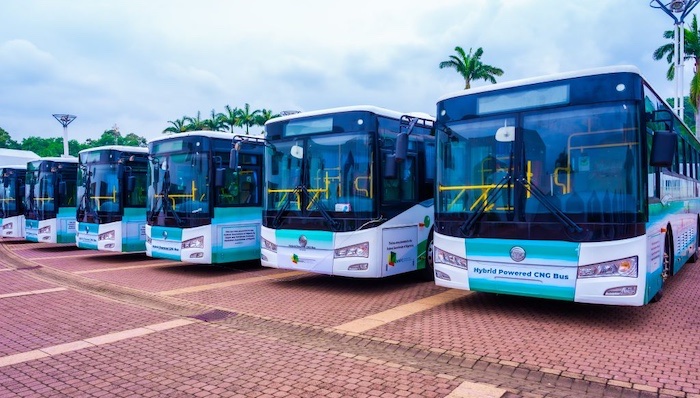
As part of the launch, officials unveiled 222 CNG and electric vehicles, including buses, tricycles and electric cars intended to support cleaner and more affordable transportation in the region. Two additional CNG refuelling stations were also commissioned along the Kano-Zaria corridor to strengthen the supporting infrastructure for the initiative.
- Dangote Refinery’s N2.15 Trillion IPO Closes Today as Investors Make Final Push
 LAGOS, Nigeria — The highly anticipated initial public offering (IPO)…
Read More “Dangote Refinery’s N2.15 Trillion IPO Closes Today as Investors Make Final Push” »
- NCAA to Probe Airline After Passenger Reportedly Bleeds Amid Extreme Heat on Abuja–Calabar Flight
 The Nigeria Civil Aviation Authority (NCAA) is set to investigate…
Kano State Governor Abba Kabir Yusuf described the programme as a timely intervention capable of easing transportation challenges, reducing the cost of living and creating employment opportunities for young people in the state.
The governor stated that Kano would continue to collaborate with the Federal Government and private investors to expand gas and electric mobility infrastructure across the state, adding that the initiative would open opportunities in refuelling infrastructure, conversion centres, assembly plants, logistics and manufacturing.
The rollout also aligns with Nigeria’s broader gas expansion strategy and ongoing investments in national gas infrastructure, including the Ajaokuta–Kaduna–Kano gas pipeline project designed to improve gas supply to Northern Nigeria.
Industry stakeholders believe the initiative could significantly lower transportation expenses for commercial operators and commuters if conversion infrastructure and refuelling access continue to expand nationwide.