



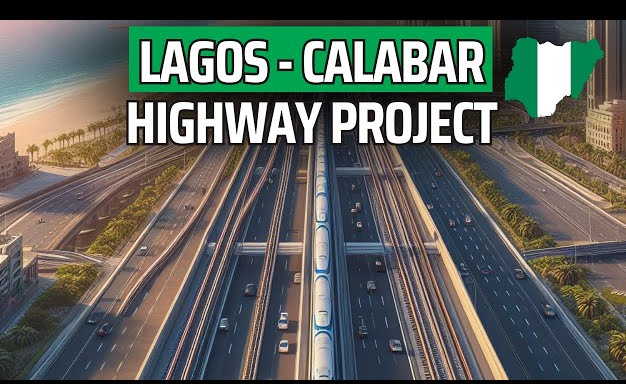
Nigeria’s Minister of Works, Engr. David Umahi, has disclosed that the ongoing Lagos-Calabar Coastal Highway project will cost about ₦7.5 billion per kilometre on a standard two-lane basis. The minister made this known while providing fresh clarifications on the cost structure of the massive infrastructure project, which has continued to attract public debate.
According to Umahi, the ₦7.5 billion figure was derived after recalculating the total cost of the first phase of the project, a 47.47-kilometre stretch and aligning it with what a standard two-lane highway would cost. The section, which runs from Lagos, includes six lanes, multiple flyovers, underpasses, solar-powered lighting systems, and extensive shoreline protection.
“When you consider the full engineering demands of the project, the cost per kilometre for a standard two-lane equivalent comes to ₦7.5 billion,” Umahi explained. “This is because the first segment is not a typical road; it’s a six-lane concrete highway constructed on very challenging terrain.”
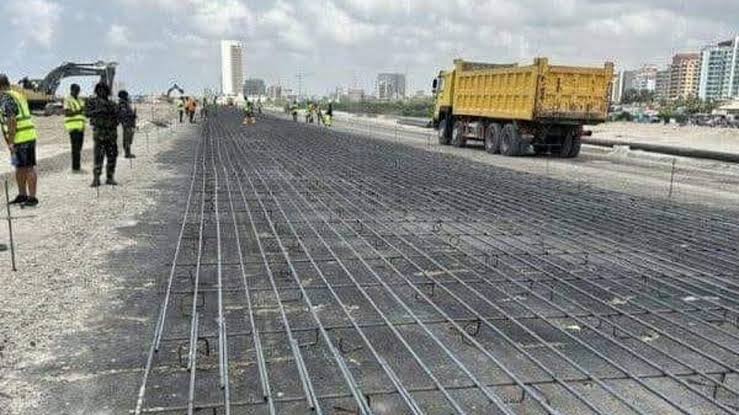
The minister revealed that the total cost of the 47.47-kilometre stretch stands at ₦1.067 trillion, noting that the coastal route requires significant soil filling, deep excavation, and structural reinforcement due to the swampy and sandy nature of the terrain.
Umahi further emphasized that the project’s cost is being misconstrued in the public domain. He clarified that earlier estimates of ₦4 billion per kilometre were based on basic two-lane roads built on stable inland terrain, not the complex coastal engineering work currently underway.
- Nigeria’s First Ebola Patient Identified as Wife of Swiss Diplomat as Authorities Probe Source of Infection
 Nigeria’s latest Ebola case has been traced to a 42-year-old…
- MURIC Seeks Police Probe into Alleged Killing of Man Inside Oyo Mosque
 The Muslim Rights Concern (MURIC) has petitioned the police over…
Read More “MURIC Seeks Police Probe into Alleged Killing of Man Inside Oyo Mosque” »
“We are constructing a highway that will stand the test of time,” he said. “This is not just a road, it’s a coastal corridor with flyovers, drainage systems, shore defences, and other infrastructure that justify the current cost estimates.”
The Lagos-Calabar Coastal Highway, one of the most ambitious infrastructure projects in Nigeria’s history, spans approximately 700 kilometres and will link major coastal states including Lagos, Ogun, Ondo, Delta, Bayelsa, Rivers, Akwa Ibom, and Cross River.
Umahi also highlighted that the project, championed by President Bola Tinubu’s administration, is being implemented using reinforced concrete technology, which, although more expensive at the construction stage, offers longer durability and lower maintenance costs compared to asphalt.
The minister assured Nigerians that transparency and accountability remain key to the project’s delivery, noting that every section will undergo a technical and financial audit before approval.
“Our goal is not just to build roads, but to build value, a coastal highway that will stimulate trade, tourism, and national integration for decades,” Umahi added.
While the debate over cost continues, the Lagos-Calabar Coastal Highway remains a symbol of Nigeria’s push toward modern infrastructure and economic connectivity across its coastal regions.