







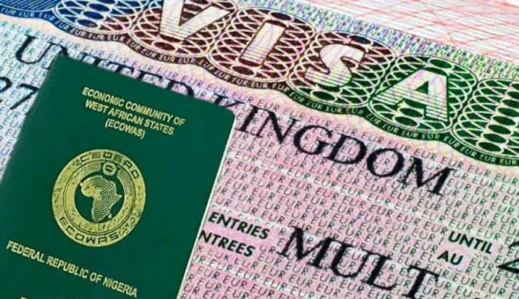
The United Kingdom government has announced a sweeping increase in visa, immigration, and citizenship fees, with the new charges set to take effect from April 8, 2026, in a move that will significantly raise the cost of travel, study, work, and settlement in the country.
The fee adjustments, confirmed by the UK Home Office, cut across virtually all visa categories—visitor, student, skilled worker, settlement, and citizenship applications—marking one of the most comprehensive revisions in recent years.
Contrary to early “breaking news” claims suggesting a flat rise to £222, official data shows that visa fees will vary widely depending on the category, with increases generally ranging between 6% and 25%.
For short-term visitors, the standard six-month visa will rise modestly from £127 to £135. However, long-term visitor visas will see steeper increases, with the 10-year visa climbing from £1,059 to £1,128.
Student visa applicants will also face higher costs, as fees increase from £524 to £558, while skilled worker visas will rise across multiple bands. For instance, applicants applying from outside the UK for up to three years will now pay £819, up from £769.
Settlement and citizenship routes are similarly affected. The cost of naturalisation as a British citizen will increase from £1,605 to £1,709, while indefinite leave to remain (ILR) applications will exceed £3,200.
In addition, the Electronic Travel Authorisation (ETA)—a requirement for visa-exempt travellers—will see one of the sharpest hikes, rising by 25% from £16 to £20.
- Nigeria’s First Ebola Patient Identified as Wife of Swiss Diplomat as Authorities Probe Source of Infection
 Nigeria’s latest Ebola case has been traced to a 42-year-old…
- MURIC Seeks Police Probe into Alleged Killing of Man Inside Oyo Mosque
 The Muslim Rights Concern (MURIC) has petitioned the police over…
Read More “MURIC Seeks Police Probe into Alleged Killing of Man Inside Oyo Mosque” »
Overall, most visa-related charges are expected to rise by an average of 6–7%, reflecting what analysts describe as an “inflation-plus” adjustment by the UK government to offset administrative and migration management costs.
The increases are expected to have far-reaching implications, particularly for international students, migrant workers, and families seeking relocation. Employers sponsoring foreign workers will also face higher recruitment costs due to rising sponsor licence fees and associated charges.
For prospective applicants, immigration experts advise early submission of applications where possible to avoid the higher fees, as payments must match the updated rates from the April implementation date or risk processing delays or rejection.
The 2026 fee hike underscores the UK’s broader immigration policy direction—tightening financial thresholds while maintaining access for skilled migration—amid ongoing efforts to manage net migration and public service costs.