


The Federal Government has announced plans to train and equip 1,200 Nigerian youths across the country’s six geopolitical zones with practical skills in graphics and Artificial Intelligence (AI) design, makeup artistry and fashion designing as part of its broader poverty-reduction and youth empowerment efforts.
The programme is being implemented through the National Poverty Reduction with Growth Strategy (NPRGS) under the Office of the Senior Special Assistant to the President on Technical, Vocational and Entrepreneurship Education (OSSAP-TVEE). Each geopolitical zone is expected to produce 200 beneficiaries for the initial phase of the nationwide programme.
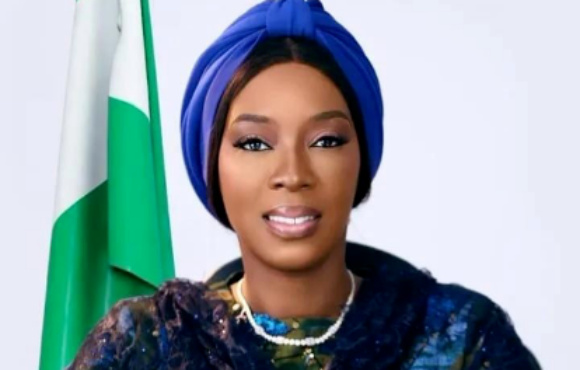
Senior Special Assistant to the President on Technical, Vocational and Entrepreneurship Education, Dr Abiola Arogundade, disclosed the development in a statement, explaining that the initiative is designed to move beyond conventional training by giving beneficiaries practical tools needed to begin using their newly acquired skills.
The Federal Government said the zonal expansion follows an earlier training programme in Abuja, where the initiative reportedly attracted more than 7,000 applications, indicating significant interest among young Nigerians in acquiring marketable vocational and digital skills. Graduates of the Abuja phase received laptops and certificates upon completion.
Under the new phase, training will be adapted to local market demand, relevance and the preferences of participants in each location. The approach is intended to ensure that beneficiaries acquire skills with potential applications within their respective communities rather than following a completely uniform curriculum nationwide.
The South-West phase, being implemented in Oyo State, is scheduled to commence on September 28, 2026. The training will cover graphics and AI design, makeup and fashion designing, with the programme expected to run for about two weeks.
A major component of the intervention is the provision of start-up equipment after training. According to the Federal Government, beneficiaries in graphics and AI design will receive laptops, while makeup trainees will receive fully equipped makeup kits. Fashion designing beneficiaries are expected to receive sewing machines and other starter materials.
The programme is also expected to extend beyond the three vocational areas in locations where other skills are considered more relevant. For example, information on the wider rollout indicates that some beneficiaries will receive training and equipment in areas such as solar energy installation and yoghurt production, depending on local economic opportunities.
Arogundade said the Federal Government is seeking the collaboration of state governments, traditional rulers, community leaders and private-sector organisations as the programme expands. Such partnerships are expected to support grassroots mobilisation and create additional opportunities for beneficiaries to apply their skills after completing the training.
The Federal Government has identified the programme’s broader objectives as equipping young Nigerians with practical and marketable skills, reducing unemployment and underemployment, promoting entrepreneurship and self-reliance, and supporting its wider poverty-reduction agenda. The initiative forms part of the government’s stated ambition of expanding economic opportunities for young Nigerians and contributing to its goal of lifting millions of citizens out of poverty.
- Dangote Refinery’s N2.15 Trillion IPO Closes Today as Investors Make Final Push
 LAGOS, Nigeria — The highly anticipated initial public offering (IPO)…
Read More “Dangote Refinery’s N2.15 Trillion IPO Closes Today as Investors Make Final Push” »
- NCAA to Probe Airline After Passenger Reportedly Bleeds Amid Extreme Heat on Abuja–Calabar Flight
 The Nigeria Civil Aviation Authority (NCAA) is set to investigate…