



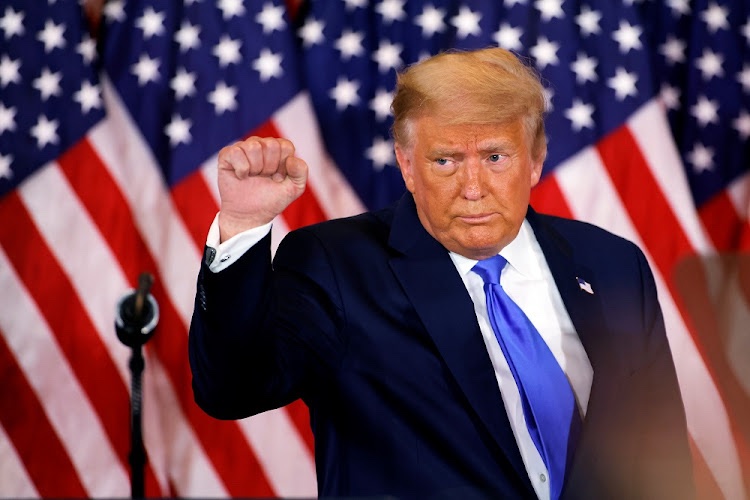
U.S. President Donald Trump has announced a sweeping new immigration policy, declaring that the United States will “permanently pause migration from all Third World Countries.” The announcement was made shortly after a fatal shooting near the White House that involved an Afghan national, an incident that has intensified debates around immigration and national security.
In his statement, Trump said the move was necessary to give the American system “time to fully recover” from what he described as years of flawed migration policies. He blamed the Biden administration for enabling “millions of illegal admissions,” claiming that many were signed off using what he referred to as President Biden’s “autopen,” a term he used to challenge the legitimacy of those approvals.

Trump further pledged to reverse all immigration admissions he classified as “illegal,” promising to terminate the entry of individuals approved under Biden-era directives. He vowed to remove from the country anyone he believes is not a “net asset” to the United States or who he perceives as lacking loyalty to what he called “our Country and our Civilization.”
The announcement has raised widespread questions, particularly because Trump did not publish an official list of what constitutes “Third World Countries.” Analysts note that the term is outdated and imprecise, often applied broadly to developing nations across Africa, Asia, Latin America, and the Pacific. This ambiguity means millions of migrants and prospective applicants face immediate uncertainty.
- Nigeria’s First Ebola Patient Identified as Wife of Swiss Diplomat as Authorities Probe Source of Infection
 Nigeria’s latest Ebola case has been traced to a 42-year-old…
- MURIC Seeks Police Probe into Alleged Killing of Man Inside Oyo Mosque
 The Muslim Rights Concern (MURIC) has petitioned the police over…
Read More “MURIC Seeks Police Probe into Alleged Killing of Man Inside Oyo Mosque” »
Reports from multiple outlets show that the proposed policy could affect citizens of dozens of countries considered low-income or developing. Immigration experts caution that such a sweeping ban, if implemented, would represent one of the most dramatic shifts in U.S. migration policy in modern history and would likely face numerous legal challenges.
Trump also proposed additional measures, including ending federal benefits for non-citizens, denaturalizing migrants who “undermine domestic tranquility,” and deporting foreign nationals deemed a public burden or a threat to national cohesion. He framed these measures as necessary to restore “order, stability, and safety” across the U.S.
The policy announcement followed an incident near the Farragut North area of Washington, D.C., where two National Guard members were shot. One died from his injuries, while the second remains in critical condition. Authorities confirmed that the suspect was an Afghan national, sparking immediate political reactions and renewed scrutiny of immigration vetting procedures.
The U.S. administration stated that the shooting exposed deep flaws in prior vetting systems, particularly for asylum applicants and humanitarian entrants. Officials aligned with Trump have argued that the tragedy could have been avoided with stricter immigration controls, a claim critics say oversimplifies a complex security landscape.
While Trump’s supporters have welcomed the plan as a bold step toward protecting American citizens, civil rights groups and immigration advocates have condemned it as discriminatory, overly broad, and potentially unconstitutional. Many warn that defining migrants based on their country’s economic status could lead to racial profiling and violate international agreements.
As the political environment continues to heat up, Trump’s declaration is expected to dominate national debate in the coming weeks. With no clear implementation timeline and many legal uncertainties, the nation now awaits further details on what could become one of the most consequential immigration overhauls in U.S. history.