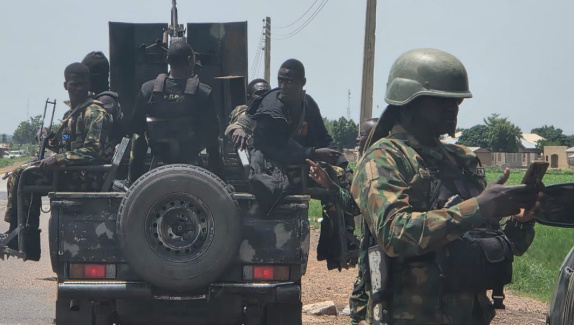





The Christian Association of Nigeria (CAN) has publicly aligned itself with U.S. lawmakers who have accused Nigeria of systematic persecution of Christians, calling on the Federal Government to step up protection for communities under threat.
In a statement signed by Archbishop Daniel Okoh, CAN affirmed that “many Christian communities in parts of Nigeria, especially in the North, have suffered severe attacks, loss of life, and the destruction of places of worship.”
The church body said these incidents should not be dismissed as isolated cases, but viewed as part of a broader crisis calling for urgent government action.
The recent surge in tension around the issue was partly triggered by a bill introduced by U.S. Senator Ted Cruz, which seeks to hold Nigerian officials accountable for “facilitating the mass murder of Christians.”
The proposed “Nigeria Religious Freedom Accountability Act of 2025” includes provisions for targeted sanctions against Nigerian officials, and calls for Nigeria to be designated a “country of particular concern.”
- Nigeria’s First Ebola Patient Identified as Wife of Swiss Diplomat as Authorities Probe Source of Infection
 Nigeria’s latest Ebola case has been traced to a 42-year-old…
 - MURIC Seeks Police Probe into Alleged Killing of Man Inside Oyo Mosque
 The Muslim Rights Concern (MURIC) has petitioned the police over…
Read More “MURIC Seeks Police Probe into Alleged Killing of Man Inside Oyo Mosque” »
Meanwhile, U.S. House Representative Riley Moore wrote to Secretary of State Marco Rubio, demanding diplomatic pressure on Nigeria over the alleged “systematic persecution and slaughter” of Christians.
American public figures such as Bill Maher have also made claims that Christians in Nigeria are being “systematically exterminated.”
The federal government of Nigeria, however, has consistently rejected claims of religious genocide. In late September, President Bola Tinubu described such allegations as “unfounded,” emphasizing that Nigeria is built on religious diversity and resilience. The following week, Information Minister Mohammed Idris called the genocide claims “ignorant, false and baseless.”
The House of Representatives also moved swiftly to counter the U.S. proposals. In a resolution sponsored by Deputy Speaker Benjamin Kalu and passed by 359 lawmakers, the Lower Chamber condemned the U.S. bill as an affront to Nigeria’s sovereignty and denied that a state-sponsored persecution of Christians exists. The resolution rejected the framing of Nigeria’s security crisis as a religious conflict, and called for fact-finding, diplomatic engagement, and adherence to Nigeria’s constitutional protections for religious freedom.
Though it expressed appreciation for what it called “sustained advocacy” over the years, including appeals to the International Criminal Court (ICC) and partnerships with global Christian bodies, CAN said the time has come for more decisive and equitable state intervention.
The church body urged that government efforts be uniformly applied across all regions, warning that too many pleas for justice have been met with delay or denial.
CAN also called on Christian leaders to respond with unity, wisdom, and faith, emphasizing that peace remains fragile.
“As painful as these realities are, the healing of Nigeria will not come from denial or blame, but from courage: the courage to face our collective failures, to grieve together, and to rebuild trust,” Okoh stated.
At the heart of the controversy is a complex and evolving security challenge in Nigeria, where violent groups, banditry, and communal conflicts have claimed lives across religious lines. Though claims of genocide remain deeply contested, CAN’s endorsement of U.S. lawmakers’ language raises the stakes in the domestic debate over religious violence.
For now, the focus shifts to how the Nigerian government responds, whether by increasing protection for vulnerable communities, launching transparent investigations, or engaging diplomatically to manage international pressure.